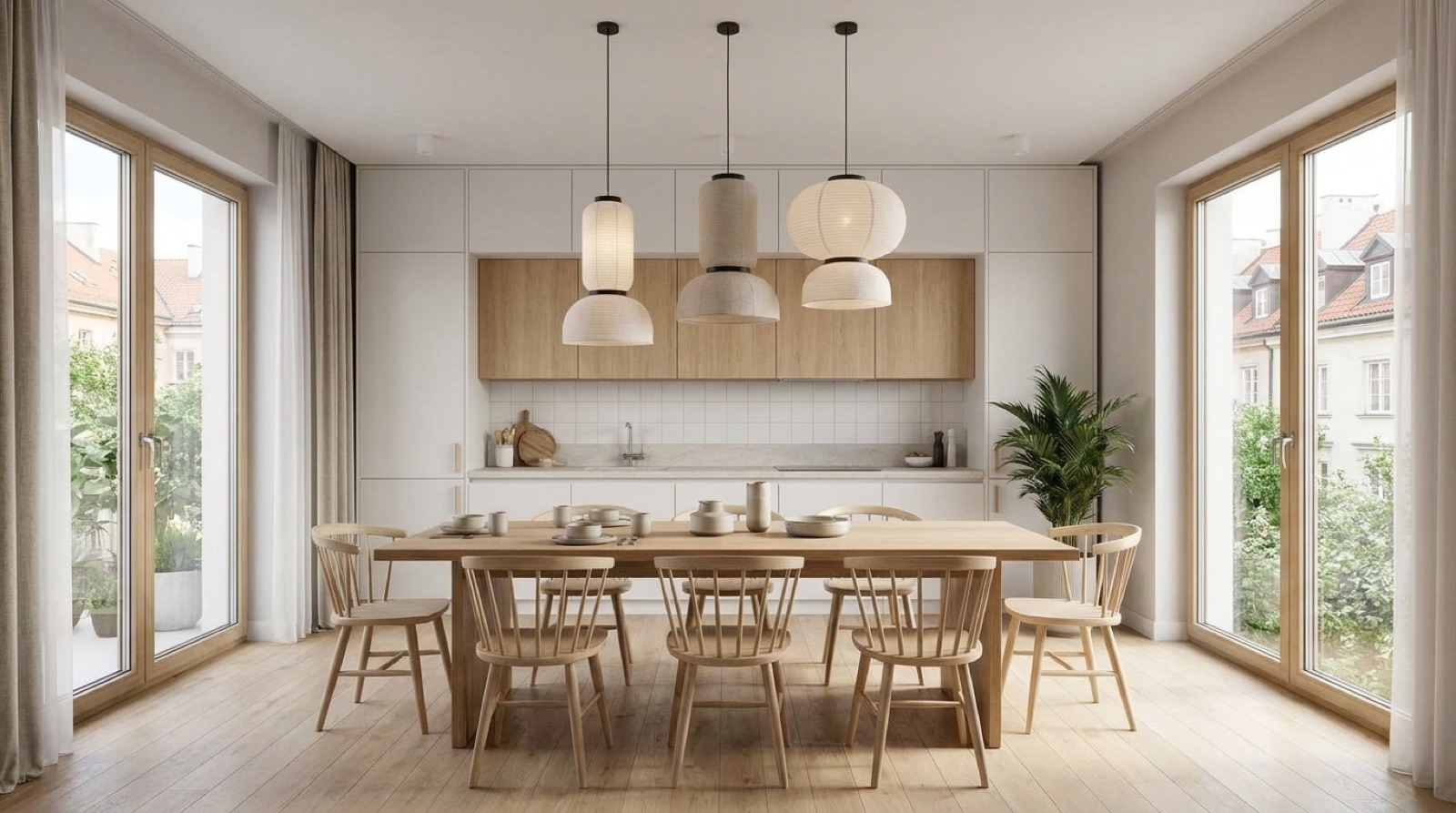
An empty room photographs badly and a staged one sells faster, so the only question left is which kind of staging. Real staging means furniture trucked in and arranged by a stylist. Virtual staging means a photo editor drops furniture into an empty room on a screen. Both are legitimate. Only one of them has to be disclosed, and getting that wrong is the actual risk.
What each one actually costs
Real staging means a rental fee per room, delivery and a pickup once the listing sells, usually running from a few hundred to a few thousand depending on the market and how many rooms get furnished. Virtual staging is a flat per-image fee to a photo editing service, delivered in a day or two, with no truck and no storage unit. The price gap is the entire reason virtual staging exists: it can make an empty new-build or a vacant flat look lived in for the cost of a few edited photos instead of a moving van.
The honesty problem virtual staging does not get to skip
A staged real room is furniture a viewer could, in principle, still find at the viewing. A virtually staged photo shows furniture that is not there and never will be, which is why a buyer who falls for a sofa will walk into an empty room and not find it. The industry answer is disclosure, not avoidance. The National Association of Realtors' Code of Ethics, Article 12, treats listing media as advertising that cannot misrepresent a property, and most MLS boards now require a visible label, a watermark or a line in the remarks, on any virtually staged photo.
Where a 360 tour changes the calculation
A cropped photo can hide the staging seam at the edge of the frame. A panorama cannot; the whole room is in the shot, always, which is why the staging bar is already higher for tours than for a normal listing gallery. Pano's own dollhouse massing is not virtual staging in that sense: the magic wand tool outlines furniture already in the room and turns it into a simple 3D volume for the flyout view, it does not add furniture that is not there. If a room needs staging to show well, stage it before the shoot, physically or with a disclosed virtual edit, rather than leaving the panorama to speak for an empty room.
A reasonable rule
Stage real for anything a buyer will walk through within weeks, since the furniture needs to roughly match what they will see. Virtual staging earns its keep on vacant flips, long-vacant rentals, or off-plan show units where no furniture will ever physically sit in that exact room. Either way, label it, and let the tour show the unstaged shell honestly in the scenes that stay empty.